
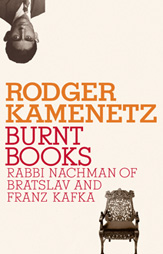


Overview
Rodger Kamenetz, acclaimed author of The Jew in the Lotus, has long been engaged in the study and practice of Jewish spirituality. And he has for many years taught a course in Prague on Franz Kafka. The more he learned about the life and work of Rabbi Nachman of Bratslav (great-grandson of the Ba’al Shem Tov, the founder of Hasidism), the more aware he became of unexpected connections between the lives and works of Kafka, a secular artist fascinated by Jewish mysticism, and Rabbi Nachman, a religious mystic who reached out to secular Jews. Both men died young of tuberculosis. Both invented new forms of storytelling that explore the search for meaning in an illogical, unjust world. Both gained prominence with the posthumous publication of their writing. And most intriguing of all, both left strict instructions that their unpublished writings were to be burned after they died.
Kamenetz uses these episodes as points of departure on a journey into the spiritual quests of these two troubled and beloved figures. He concludes with an analysis of their major works that illuminates the remarkable similarities between them. In their attempts to understand the existence of a Supreme Being in an imperfect world, both men teach us a great deal about the role of imagination in the Jewish spiritual experience.
Reader's Guide
Rabbi Nachman of Bratslav was a Hasidic spiritual leader and Jewish mystic in Eastern Europe at the turn of the 19th century. Franz Kafka was a secular author in Prague at the turn of the 20th century, creating such enduring literary works as The Trial and The Metamorphosis. At first glance, the two seem to have little in common: one devoted to religious practice and the other non-observant, one concerned with matters of the spirit and the other “made of literature.” But Rodger Kamenetz believes the two men have more in common than is immediately obvious, including the odd coincidence that in their final days, both asked their closest friends to burn their books. Kamenetz goes on a journey – literary, spiritual, and physical – to learn more about both authors and how they connect, and in the process of telling their stories, he also tells his own.
The Men: Rabbi or Writer?
Rabbi Nachman drew large audiences of followers to his oral recitations of religious parables, which sometimes lasted for days. Kafka wrote short stories and novels – most of which were unfinished, unpublished, and unread at the time of his death. Yet in many ways their missions as storytellers were similar.
• Kamenetz writes: “For me, Rabbi Nachman is Rosh Hashanah and Franz Kafka is Yom Kippur.” What does he mean? Is this a way of highlighting the differences between the two men, or the connections?
• “Rabbi Nachman is the father of the modern Yiddish tale,” Kamenetz writes. What does he mean? How might the rebbe react to such a notion? Rabbi Nachman viewed his lineage in terms of other Jewish sages, including the Baal Shem Tov, his great-grandfather and the founder of Hasidism; would he have felt comfortable seeing himself in a different lineage of often-secular Yiddish storytellers?
The Stories: Parables and Structure
Despite having different styles and different audiences, both men invented new forms of storytelling, parables that contained layer after layer of hidden meaning.
• Both men believed in the power of storytelling, but Nachman told deceptively simple stories (“kabbalah clothed in a fairy tale,” in Kamenetz’s words) while Kafka’s often difficult, uncomfortable stories were never what most people would call “simple” or “fairy tales.” What might each writer have thought of the other’s approach?
• Rabbi Nachman often disguised stories about God as parables about kings. Kafka also disguised his deeper subjects in tales about courts, governments, or even the Catholic church. Who was the audience for each author’s work? Why was it necessary to create parables rather than tackling subjects directly?
• Ancient Talmudic parables, Kamenetz explains, were defined by a two-part structure that included both the story itself (mashal) and its meaning (nimshal). Hasidic storytellers adopted this structure, but also changed the convention of the story so that paradox became “the signature of the Hasidic parable.” How does this combination of ancient structure and more modern reliance on paradox manifest itself in Rabbi Nachman’s tales? In Kafka’s stories?
• Kamenetz believes that both authors’ writing – like the Torah itself – contains all four levels of depth described in the Zohar, the kabbalistic masterwork: plain meaning, hints or allusions to Jewish texts, original interpretation of Jewish texts (midrash), and secrets that are revealed to create “new portraits of God” (the deepest level). Do you agree with this assessment? What other writers might fit this description? Do these writers – or their stories – have to be overtly Jewish, or even Jewish at all?
The Spirit: Finding Meaning and Awakening Souls
Rabbi Nachman thought Jews needed “tales to wake them to their souls,” according to Kamenetz, while Kafka said that “a book must be the ax for the frozen sea within us.” Their stories weren’t simply meant as a diversion; the authors hoped their work might awaken readers’ souls and bring meaning to an unjust world
• Several of Rabbi Nachman’s tales allude to the three phases of reality described in Isaac Luria’s kabbalah: withdrawal, shattering of the vessels, and the repair of the world (tikkun olam). “If you believe that you can damage, then believe that you can repair,” the rebbe said. What does his statement mean? Is it really about belief, or is it a call to action for his followers – and if so, what action does it demand?
• Kamenetz asserts that both authors wrote “a midrash on Job” – Kafka in The Trial, and Rabbi Nachman in “The Humble King” – “using the metaphor of a cosmically unjust legal system.” How might Rabbi Nachman react to the notion that his story was a “midrash on Job”? How about Kafka?
• Scholar Gershom Scholem said: “To understand kabbalah in our time, first we would have to read Kafka.” While Kamenetz acknowledges the apparent incongruity of that statement – Kafka didn’t know Hebrew well (although he did study it) and was not religiously observant – he nonetheless agrees with Scholem’s underlying concept. How might Kafka have reacted to being described in this way? Would he be confused, put off, flattered? How might “traditional” kabbalists react to such a comparison?
• Rabbi Nachman’s final mission involved moving to Uman and telling stories among the maskilim – the secular Jews – rather than his fellow Hasidim. Why did he make this change in location, audience, and focus? Did this mark a break from his previous work, or the logical culmination of that work?
• Kafka also reached out across the religious-secular divide; he spent years studying Jewish mysticism and weaving it into his work. Why was this kind of outreach important to him? What did he hope to achieve? When you read stories, are you simply hoping to be entertained, or are you hoping to learn something deeper that makes reading itself a spiritual pursuit?
• Rabbi Nachman traveled to the land of Israel – although he never made it to Jerusalem. Kafka dreamed of the same journey but never left Europe. How did Zionism influence their writing, their lives, their aspirations? How does it affect your own life, and your own reading?
The Context: Times of Change
Eastern European Jewry was going through a tumultuous period during both men’s lives. Crumbling empires and nascent nation-states brought shifting borders and changing rulers – and waves of anti-Semitic persecution. Meanwhile, Jews were divided among themselves as a variety of religious and cultural movements took hold.
• Rabbi Nachman lived in Ukraine, in a land whose political and cultural lines were drawn and redrawn frequently, as rulers shifted between Poles, Lithuanians, Russians, and Turks, and Ukrainian and Jewish subjects often clashed with those in power; Kafka also lived in a land with shifting boundaries, as a German-speaking Jew in Prague during the collapse of the Austro-Hungarian Empire. How did these politically and culturally volatile situations influence their work?
• In addition to politics and national identities, religious movements within Judaism also conflicted with one another during the writers’ lifetimes: the Hasidim,mitnagdim, and maskilim of Rabbi Nachman’s lifetime competed for followers, as did the Zionists, secular Jews, and Hasidim in Kafka’s time. How did these different visions of Jewishness influence their work? How does your own experience of Jewishness affect how you read both men’s stories?
• In Kafka’s Metamorphosis, Gregor Samsa awakens to find himself transformed into a bug of some sort. In English, this creature is often assumed to be a cockroach – although that is not the word Kafka uses, and Kafka resisted giving a definitive shape to the creature, telling an illustrator: “The insect itself cannot be illustrated.” In fact, the word Kafka uses – ungezeifer, in German – is the same word his father once used to describe one of Kafka’s Hasidic friends, and the Nazis later used to describe Jews in the concentration camps. How does knowing the cultural connotations of the word change your impression of the story? Kafka died in 1924, but do we read this story – and his other stories – differently today, post-Holocaust?
The Biographers: Stories about Storytellers
Rabbi Nachman and Kafka alike have become even more famous since their deaths – due in large part to the men who guarded their literary legacies and helped craft their biographies.
• Both Kafka and Rabbi Nachman had very close friends who were also their biographers: Max Brod and Rabbi Nathan, respectively. Do you think this might make the information we know about both writers more accurate (since the people writing their biographies knew them personally and deeply) or less accurate (since they were hardly impartial observers)? How might this affect what we know about Kafka and Rabbi Nachman today?
• Both men had short lives punctuated by awkward or difficult family situations: Rabbi Nachman spent much time away from his family, before losing his first wife and his child. Kafka, on the other hand, couldn’t seem to get away from his family, suffering under his father’s tyrannical rule for most of his life, unable to follow through on several engagements to marry. How did their respective personal lives affect their work?
• In writing this dual biography, Rodger Kamenetz journeys to Uman to Rabbi Nachman’s grave. Is this physical journey a necessary part of a spiritual connection to the rebbe? Why do you think so many men make this trip to Uman every Rosh Hashanah – to be “with” Rabbi Nachman himself, to follow in his footsteps, to be with each other? Why did Kamenetz make the trip? Could he have written this biography without taking the trip himself? How would it have been different?
The Fire: Burning Books
Both Rabbi Nachman and Kafka left strict instructions that after they died (of tuberculosis, in both cases), their unpublished writings were to be burned. The rebbe’s work was destroyed, but Max Brod preserved Kafka’s work and had much of it published posthumously.
• Both Rabbi Nachman and Kafka asked their close friends to burn their books. Why didn’t they simply burn the books themselves? Rabbi Nathan obeyed Rabbi Nachman’s wishes; does this implicate him in the destruction of what might have been a great work of spiritual wisdom? Max Brod saved and published much of Kafka’s work; does this make him a lesser friend, a greater guardian of literature, a better or worse judge of Kafka’s true desires?
• In discussing Rabbi Nachman’s rationale for burning his books, Kamenetz explains the rebbe’s position: “…it’s better if the author himself destroys a holy book before the world has a chance to ruin it. The worst desecration is not burning a book, but allowing the wrong readers to misread and so pervert the holiness into heresy.” How do you think this relates to Kafka’s rationale for burning his books? How might Kafka’s work have been “ruined,” and who would those “wrong readers” have been?
• In a larger sense, Rabbi Nachman’s notion that even a burnt book has value contains the suggestion that lives cut short are still valuable. In what way does this philosophy contribute to his growing popularity after his death? How does it make him a post-Holocaust mystic, despite the fact that he died in 1810?
• Book-burnings come up many times in the book. In addition to Kafka and Rabbi Nachman ordering the burning of their own work, Kamenetz alludes to Nazis burning Jewish books in the 1900s, and the Bishop of Kamenetz ordering the burning of the Talmud in the town square in the 1700s. When books are burned, does it matter who is burning them, and why they are burning them?
More Videos
Burnt Books: Rabbi Nachman Of Bratslav and Franz Kafka from Tablet Magazine on Vimeo.
Mail Art Gallery

Nextbook Press is proud to announce a call for Mail Art to celebrate the publication of Burnt Books: Rabbi Nachman of Bratslav and Franz Kafka, by Rodger Kamenetz.
Burnt Books is an evocative theme conjuring all kinds of imagery of loss and ephemera, memory, and the sharing of stories at a time when we are on the eve of dramatic changes in how words themselves are passed on and stories told. Conflicting perceptions on the meaning of ”death of print,” losses within the publishing industry and yet a rise of interest in small press publishing and new digital, interactive storytelling forms. The book may be burning (literally made of light not paper, online, eBooks etc.. ) yet it is not consumed by the flame; it is transformed, reincarnated, rejuvenated. Rodger Kamenetz’s bookparallels the lives of two great storytellers: Rabbi Nachman the 18th century mystic and Franz Kafka, the modern era surrealist. Through this comparison, Kamenetz addresses the transformative and healing power of storytelling and books in whatever form. Visit the gallery.
News and Reviews
Kamenetz for Huffington Post: “Why Holy Books Can’t Really Be Burnt”
"Moral idiots can be useful irritants, so maybe the Florida pastor who wants to burn Korans isn't all bad. He got me thinking about the great shift to e-books. " Continue reading
Burnt Books: ‘Deeply imagined and fastidiously researched’
“Two yearning souls face each other and touch in this remarkable encounter, both deeply imagined and fastidiously researched. And when, forever questing, Rodger Kamenetz adds his own journey to the mix, what he gives us is so fascinating I read it hungrily. Kamenetz makes a case for the kinship of these brother storytellers that is more than irresistible: it feels inevitable.” Continue reading
Award-Winning New Orleans Writer Rodger Kamenetz’ New Volume “Burnt Books: Rabbi Nachman of Bratzlav and Franz Kafka”
Today - on "The Sound of Books" - with Fred Kasten - the new book from award-winning New Orleans writer Rodger Kamenetz - "Burnt Books: Rabbi Nachman of Bratzlav and Franz Kafka" Continue reading
Burnt Books by Rodger Kamenetz reviewed: “If you are going to descend to Kafka’s circle of hell, then it helps to have a trustworthy guide”
"If you are going to descend to Kafka’s circle of hell, then it helps to have a trustworthy guide, both learned and hopeful, such as Rodger Kamenetz, who in a brilliant and fascinating new book illuminates Kafka by comparing and contrasting him with a Hasidic mystic, Rabbi Nachman of Bratslav." Continue reading
Kamenetz pens a new chapter in his long journey of discovery
"Burnt Books" deftly blends a travel narrative with literary criticism, a double biography, and speculations about the parallel spiritual lessons of Nachman and Kafka. At one point, Kamenetz quotes an observation, by philosopher Gershom Sholem, that Kafka leads readers to "those mystical theses that lie on the narrow boundary between religion and nihilism." That's a pretty good description of "Burnt Books," too -- although Kamenetz insists, with a hearty laugh, that "this book is very much an autobiography." Continue reading
Burnt Books aptly relates two unlikely Jewish personalities
It's hard to imagine two more disparate characters: the Hasidic rabbi rooted in the life of the 18th-century shtetl and the secular novelist of early 20th-century Prague. And yet in linking the biographies of Rabbi Nachman of Bratslav and Franz Kafka in this profound study, poet and scholar Rodger Kamenetz weaves a web of connection so intricate it seems plausible that one of his subjects might have stared into a mirror and seen the other's face. Continue reading
Rodger Kamenetz paints a “dramatic and revelatory double portrait” in Burnt Books
Kamenetz's dramatic and revelatory double portrait is built on a solid foundation of elegantly explicated Jewish thought deepened by the story of his journey to Ukraine to visit Rabbi Nachman's grave. Here is a whole new slant on Kafka, a unique and affecting portrait of a creative holy man, and a radiant inquiry in celebration of how both sacred texts and great literature are open to "infinite interpretation." Continue reading
Jewish Book World reviews Burnt Books and interviews author Rodger Kamenetz: “I can’t talk about Rabbi Nachman without talking about Kafka”
"Burnt Books is a fascinating and intellectually challenging journey of heart and mind." Continue reading
Rodger Kamenetz’s Burnt Books “the best of places to start” with Kafka and Nachman
"In every practical consideration, they were both total losers right through to their deaths. They only became posthumous winners because those closest to them refused to carry out their dearest and most important wishes. Our obsessions about them reveal our own inner emptiness and cravings for guidance. Mr. Kamenetz's wonderful, sympathetic book is the best of places to start." Continue reading
Rodger Kamenetz: “Mining the surprisingly parallel strains, yet stunning incongruities, of the most intriguing Jews of the past 200 years”
Mining the surprisingly parallel strains, yet stunning incongruities, of the most intriguing Jews of the past 200 years is a bold venture. Welcome to the cross-section of Rabbi Nachman of Bratslav, the early 19th-century spiritualist guru of radical religious meaning, and Franz Kafka, the early 20th-century existentialist extraordinaire. Continue reading
Burnt Books Reviewed: “Thoroughly Secular, Deeply Religious, Seriously Joking:
"Like Kafka’s parables and the enigmatic, humane tales of Rabbi Nachman, Rodger Kamenetz’s Burnt Books has an economical generosity that is thoroughly secular, deeply religious, and seriously joking." Continue reading
Rodger Kamenetz provides a passionate and clear account in Burnt Books
"Kamenetz makes it clear that he is not a mystic, not a Hasid, not even much of a practicing Jew, but nobody reading Burnt Books will doubt that he is spiritually inclined and soulfully attuned." Continue reading
About the Author
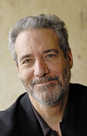
Rodger Kamenetz
RODGER KAMENETZ is the author of The Jew in the Lotus and The History of Last Night’s Dream, and of seven other books of poetry and prose. A winner of the National Jewish Book Award, he is LSU Distinguished Professor … Continue reading